

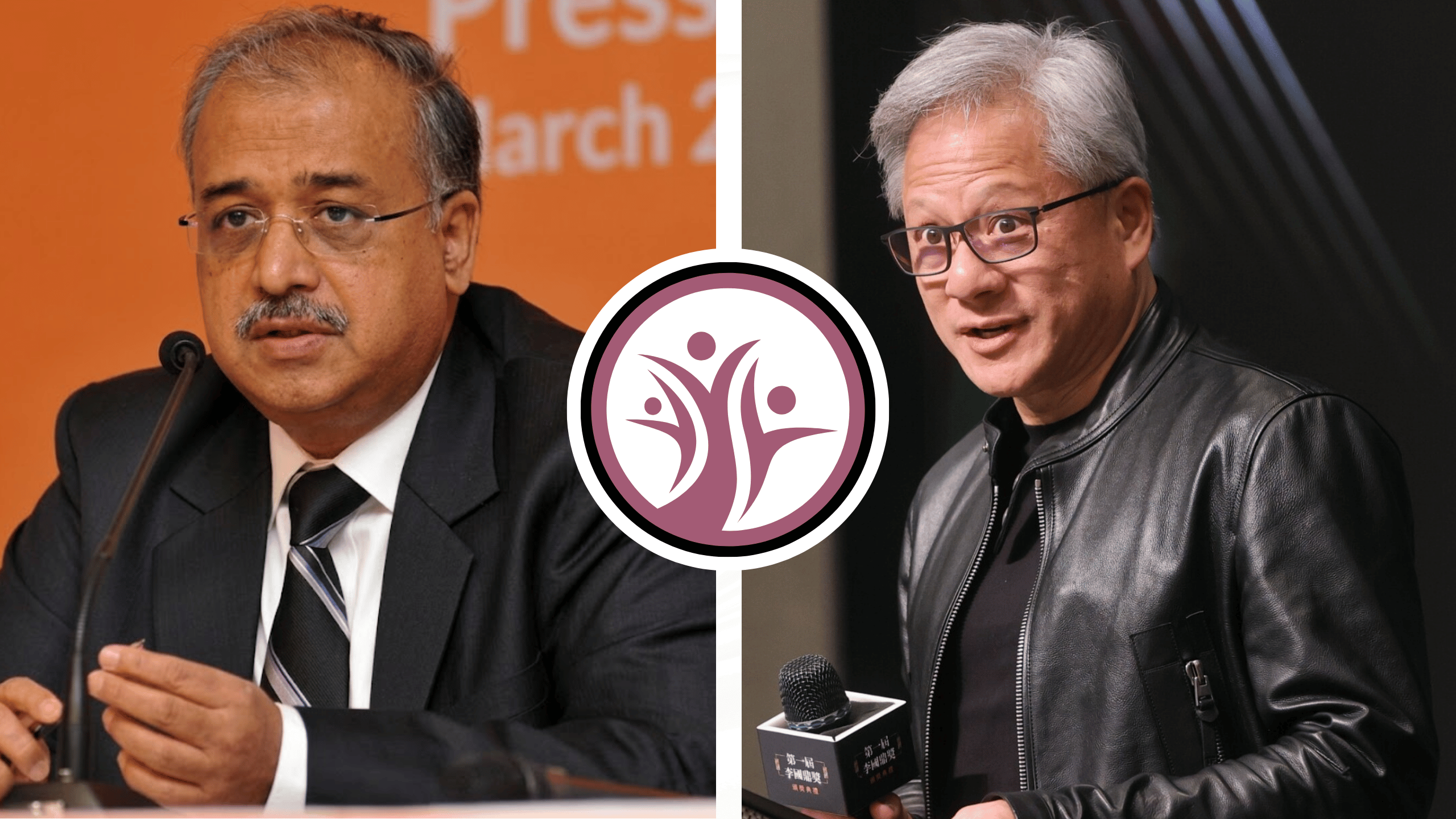
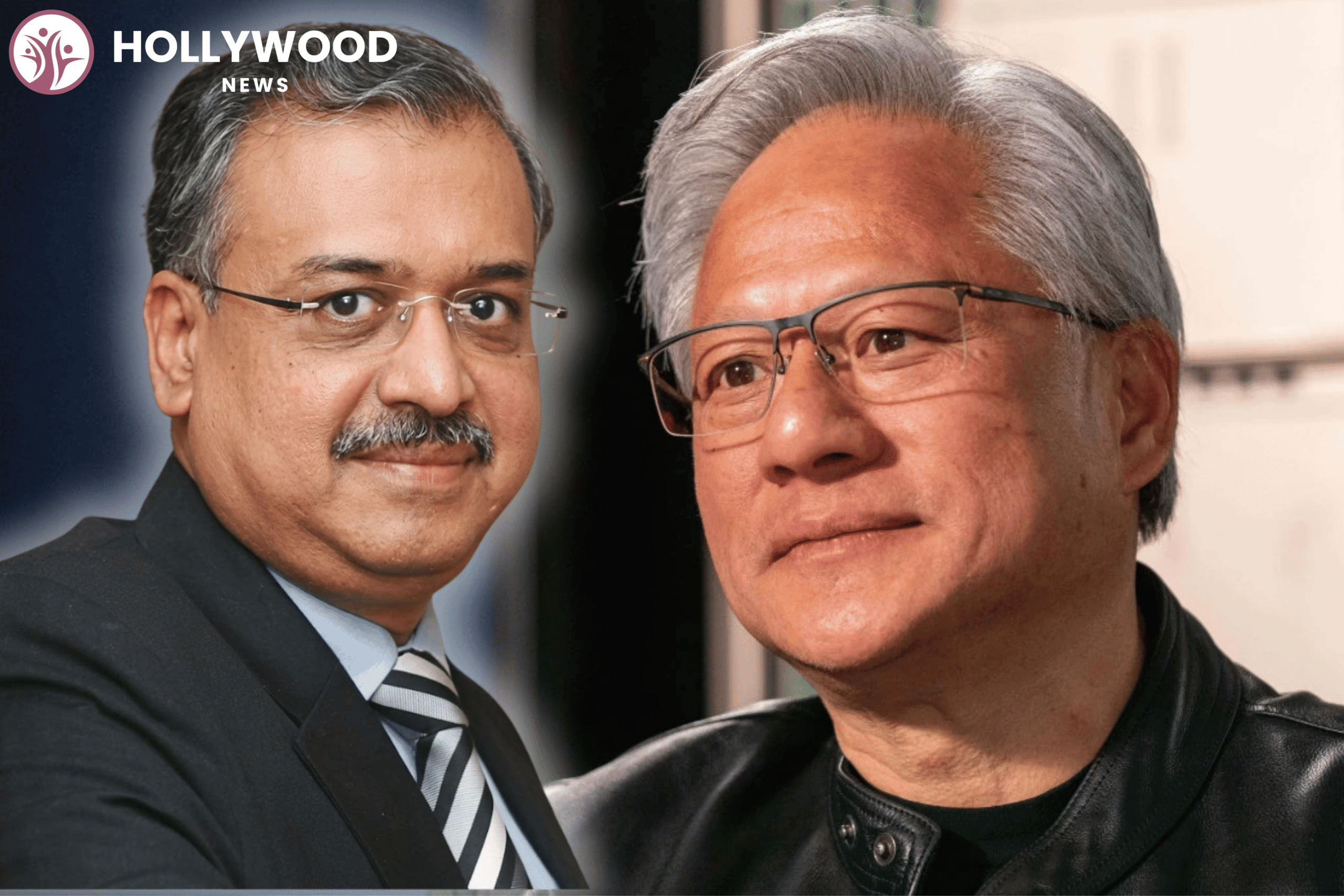
Dilip Shanghvi and Jensen Huang are self-made billionaire founders who built globally important companies in pharmaceuticals and technology, respectively. There is no verified public evidence of a family relationship, business partnership, or joint venture between them, so the most useful way to understand the keyword “dilip shanghvi and jensen huang” is as a comparison of two very different founder-led success stories.
As of September 10, 2026, Forbes estimated Shanghvi’s real-time net worth at about $26.4 billion, while Huang’s was about $189 billion. Their fortunes come primarily from equity connected to Sun Pharmaceutical Industries and NVIDIA, which means the figures can change considerably as public-market valuations move.
Dilip Shanghvi and Jensen Huang at a Glance
| Detail | Dilip Shanghvi | Jensen Huang |
|---|---|---|
| Current role | Executive Chairman, Sun Pharmaceutical Industries | Founder, President and CEO, NVIDIA |
| Main industry | Pharmaceuticals and healthcare | Semiconductors, accelerated computing and AI |
| Company founded | Sun Pharma, 1983 | NVIDIA, 1993 |
| Age in 2026 | 70 | 63 |
| Education | Commerce graduate, University of Calcutta | BSEE, Oregon State University; MSEE, Stanford University |
| Estimated net worth | About $26.4 billion | About $189 billion |
| Main source of wealth | Sun Pharma | NVIDIA |
| Current leadership status | Stepped down as Managing Director in 2025 but remains Executive Chairman | Continues as NVIDIA CEO and president |
| Individual/company ownership snapshot | Shanghvi directly held 9.60% of Sun Pharma at March 31, 2026 | Huang beneficially owned 3.58% of NVIDIA at March 23, 2026 |
Sun Pharma’s regulatory filing showed its promoter and promoter group collectively held 54.48% of the company at March 31, 2026, while Shanghvi personally appeared with a 9.60% direct holding. Those two percentages should not be treated as the same thing because promoter-group shares include companies, trusts and other individuals.
NVIDIA’s 2026 proxy statement reported 870.6 million shares beneficially owned by Jen-Hsun Huang, better known as Jensen Huang, representing 3.58% of outstanding NVIDIA shares as of the filing’s ownership date. Some of those shares were held through trusts, entities and the Huang Foundation, so beneficial ownership is also more complex than simply counting shares registered personally in his name.
Are Dilip Shanghvi and Jensen Huang Related?
No verified evidence shows that Dilip Shanghvi and Jensen Huang are related by family or that they built a business together.
Current biographies, corporate disclosures and securities filings instead place them in separate industries and corporate ecosystems. Shanghvi is identified by Sun Pharma as its founder and Executive Chairman, while NVIDIA identifies Huang as its founder, president and CEO.
Their names make sense together mainly as a business comparison. Both spent more than three decades creating companies with international reach, both accumulated most of their wealth through ownership rather than salary alone, and both remained influential long after their businesses became major public corporations.
The similarities largely stop there. Shanghvi’s career centers on medicines, drug development, acquisitions and global pharmaceutical distribution. Huang’s centers on GPUs, computing platforms, data centers and artificial intelligence infrastructure.
How Dilip Shanghvi Built Sun Pharma
Dilip Shanghvi founded Sun Pharmaceutical Industries in 1983. Sun Pharma says the company began with only two employees and five psychiatry products before expanding into one of the world’s largest pharmaceutical businesses.
Shanghvi came from a family involved in pharmaceutical distribution. Forbes reports that he borrowed about $200 from his father to establish the business, initially focusing on psychiatric medicines.
Sun Pharma gradually broadened into cardiology, neurology and numerous other therapeutic areas. Its current portfolio covers branded and generic medicines, innovative medicines, consumer healthcare products, active pharmaceutical ingredients and technically complex formulations. The company now sells medicines in more than 100 countries.
Acquisitions became an important part of Sun Pharma’s expansion
One major characteristic of Shanghvi’s strategy has been the use of acquisitions to add markets, products and capabilities. Sun Pharma’s expansion included the transformational combination with Ranbaxy Laboratories, followed in later years by deals involving Concert Pharmaceuticals and Checkpoint Therapeutics.
The scale of this strategy increased again in April 2026. Sun Pharma agreed to acquire Organon & Co. for $14 per share in cash, giving the transaction an enterprise value of approximately $11.75 billion. Organon shareholders approved the proposed transaction in July 2026, and Sun Pharma said in its July results that completion remained targeted for early 2027.
The Organon transaction is especially significant because it could substantially broaden Sun Pharma’s international commercial infrastructure and product portfolio. Until closing, however, Organon and Sun Pharma continue to operate independently, so the planned transaction should not be described as a completed acquisition.
Shanghvi’s Role Changed in 2025
Dilip Shanghvi no longer serves as Sun Pharma’s Managing Director.
Sun Pharma appointed Kirti Ganorkar to succeed him as Managing Director effective September 1, 2025. Shanghvi remained on the board as Executive Chairman, with Sun Pharma saying he would focus on strategic oversight and strengthening the company’s specialty portfolio.
This distinction matters when comparing Shanghvi with Jensen Huang. Shanghvi remains strategically important to the company he founded, but Sun Pharma has already implemented a formal separation between the Managing Director role and Shanghvi’s position as Executive Chairman.
Sun Pharma’s current board continues to identify Ganorkar as Managing Director and Shanghvi as Executive Chairman.
How Large Is Sun Pharma Today?
Sun Pharma reported ₹582.2 billion in sales for FY2026, an increase of 11.9% from the previous financial year. Net profit was ₹114.8 billion, while global innovative medicines generated approximately $1.42 billion in annual sales.
The company continued growing into FY2027. For the quarter ended June 30, 2026, Sun Pharma reported sales of ₹151.8 billion, up 10.1% year over year, and net profit of ₹28.95 billion. Innovative medicines represented 21.9% of quarterly sales.
Sun Pharma describes itself as India’s number one pharmaceutical company and reports operations across more than 100 countries. Its current business is therefore much broader than the generic-drug company with which Shanghvi initially built his reputation.
How Jensen Huang Built NVIDIA
Jensen Huang co-founded NVIDIA in 1993 and has served as its chief executive from the beginning. NVIDIA’s official biography states that before founding the company, Huang worked at LSI Logic and Advanced Micro Devices.
His academic background is in electrical engineering. Huang earned a bachelor’s degree in electrical engineering from Oregon State University and a master’s degree in electrical engineering from Stanford University.
NVIDIA initially became prominent through computer graphics. The company credits its 1999 introduction of the GPU with helping reshape real-time computer graphics and later providing the parallel-computing foundation used for increasingly demanding scientific and artificial-intelligence workloads.
Huang’s biggest business achievement was not simply building a successful gaming-chip company. It was helping reposition NVIDIA as a broader accelerated-computing platform at a time when AI developers and cloud companies required enormous amounts of parallel processing capacity.
NVIDIA’s AI Expansion Changed Huang’s Wealth
NVIDIA’s financial growth explains much of the extraordinary increase in Huang’s personal fortune.
For fiscal 2026, NVIDIA recorded $215.9 billion in revenue, up 65% year over year. Data Center revenue alone reached $193.7 billion as accelerated computing and artificial intelligence drove demand for the company’s systems.
Growth accelerated again in the second quarter of fiscal 2027, which ended July 26, 2026. NVIDIA reported quarterly revenue of $96.2 billion, up 106% from the same quarter a year earlier, while Data Center revenue reached $89 billion.
That scale is important when interpreting Huang’s net worth. Most of his fortune is not money paid to him as CEO. It reflects the market value of his NVIDIA ownership and related holdings.
NVIDIA Is Still Expanding Under Huang
Huang remains directly involved in NVIDIA’s strategic expansion rather than shifting to a chairman-only role.
A striking recent example came on September 3, 2026, when NVIDIA announced an agreement to acquire AI developer platform Hugging Face for approximately $12.93 billion. NVIDIA said Hugging Face would remain an open platform while the companies worked to expand infrastructure and AI access.
The deal fits NVIDIA’s move beyond selling individual chips. The company increasingly operates across GPUs, networking, complete AI systems, software and infrastructure designed to support model training and inference.
That approach differs markedly from Sun Pharma’s healthcare strategy, but the underlying business principle has a similarity: both founders used their companies’ core strengths to expand into higher-value segments rather than remaining limited to the products that originally made them successful.
Dilip Shanghvi vs Jensen Huang Net Worth in 2026
Jensen Huang is substantially wealthier than Dilip Shanghvi based on current public estimates.
Forbes estimated Huang at approximately $189 billion on September 10, 2026, placing him eighth on its real-time global billionaire ranking. Forbes estimated Shanghvi at roughly $26.4 billion, ranking him around 93rd globally at that time.
These numbers should be treated as estimates rather than fixed bank balances. Billionaire wealth calculations are heavily affected by publicly traded share prices, disclosed ownership structures, private assets, debt and other factors.
Huang’s fortune has been particularly volatile. Forbes estimated him at $154 billion on its March 2026 annual billionaires list, and his real-time fortune later crossed $200 billion temporarily as NVIDIA shares rose. By September 10, it had moved back to roughly $189 billion.
Shanghvi’s wealth can also move with Sun Pharma’s market valuation, though generally with less dramatic swings than those produced by NVIDIA’s recent AI-driven share-price movements.
Ownership Explains More Than Salary
Looking only at executive compensation gives an incomplete picture of both fortunes.
Sun Pharma’s March 2026 shareholding filing showed Shanghvi directly owning approximately 230.4 million shares, or 9.60% of the company. The wider promoter and promoter group collectively controlled 54.48%.
For NVIDIA, the May 2026 proxy statement listed Huang with beneficial ownership of approximately 870.6 million shares, or 3.58% based on shares outstanding on March 23, 2026. The disclosed figure included shares held through family trusts, LLCs and the Huang Foundation.
This illustrates an important distinction between revenue, income and wealth. NVIDIA’s $215.9 billion fiscal-year revenue is company revenue, not Huang’s personal income. Likewise, Sun Pharma’s ₹582.2 billion in annual sales belongs to the corporation, not to Shanghvi personally.
Their billionaire status comes largely from ownership of valuable businesses.
Different Industries, Different Growth Models
Shanghvi and Huang built wealth in industries with very different economics.
Pharmaceutical companies must manage clinical development, regulatory approval, manufacturing quality, patents, generic competition and highly fragmented healthcare markets. A successful product can generate substantial returns, but development timelines can be long and regulatory risk remains significant.
Semiconductor and AI infrastructure companies face another type of pressure. NVIDIA operates in a market driven by rapid technological cycles, huge research investments, advanced semiconductor manufacturing, data-center spending and competition over performance, software ecosystems and computing efficiency.
Sun Pharma’s FY2026 R&D spending totaled approximately ₹35.54 billion, equivalent to 6.1% of sales. NVIDIA reported $18.5 billion in research and development expenses for fiscal 2026. The figures use different currencies and accounting contexts, so they should not be directly ranked without adjustment, but both show how central continued technical development is to their companies.
Their Leadership Styles Reflect Their Businesses
Shanghvi has historically emphasized measured expansion, disciplined acquisitions and the gradual strengthening of Sun Pharma’s pharmaceutical portfolio. The company’s transition toward innovative medicines shows an effort to combine its established generics scale with higher-value patented treatments.
Huang’s leadership is more closely associated with long-term technology bets. NVIDIA spent years developing accelerated computing before generative AI caused demand for GPU-based infrastructure to surge globally.
Both cases demonstrate why founder ownership can matter. Founders with significant equity exposure can sometimes pursue strategies whose payoff takes many years, although founder control can also create governance and succession questions that public companies must manage carefully.
Sun Pharma has already taken a visible step toward succession by appointing Ganorkar as Managing Director. NVIDIA, by contrast, remains directly led by Huang more than three decades after its founding.
Family and Personal Background
Forbes lists Dilip Shanghvi as married with two children. Sun Pharma’s corporate records identify Aalok Shanghvi and Vidhi Shanghvi as his children, and both now serve as executive directors at Sun Pharma.
That does not mean control of Sun Pharma has simply passed to the next generation. Kirti Ganorkar, rather than one of Shanghvi’s children, was selected to succeed Dilip Shanghvi as Managing Director after what the company described as a structured succession process.
Forbes also lists Jensen Huang as married. NVIDIA’s SEC disclosures identify Lori Huang as his wife and show the two serving together as trustees of certain family trusts. NVIDIA’s 2026 proxy also disclosed that Huang’s son and daughter were company employees, with compensation determined under the company’s normal employment practices for comparable positions.
Why Dilip Shanghvi and Jensen Huang Make an Interesting Comparison
The most interesting similarity is not their wealth. It is how long both founders remained connected to their original companies.
Sun Pharma was established in 1983, meaning Shanghvi has been associated with the business for more than four decades. NVIDIA was founded in 1993, and Huang has remained CEO for more than three decades.
Each founder also moved beyond the market that originally defined his company. Sun Pharma expanded from a small psychiatric-drug operation into generics, innovative medicines and global healthcare. NVIDIA moved from PC graphics into accelerated computing, data centers and AI infrastructure.
Their current positions reveal the biggest difference. Shanghvi has begun transferring day-to-day executive leadership while retaining strategic authority as Executive Chairman. Huang remains NVIDIA’s operating leader, president and CEO.
For readers searching “dilip shanghvi and jensen huang,” that is the clearest connection: two self-made founders, two highly valuable public companies, two very different industries, and two different approaches to sustaining founder influence after decades of growth.
Frequently Asked Questions
Are Dilip Shanghvi and Jensen Huang related?
No credible public evidence establishes any family relationship between Dilip Shanghvi and Jensen Huang. They come from different backgrounds and built companies in unrelated industries.
Do Dilip Shanghvi and Jensen Huang have a business partnership?
No verified joint company, strategic partnership or investment relationship between the two men is documented in the major corporate and regulatory records reviewed. Shanghvi’s principal business is Sun Pharma, while Huang leads NVIDIA.
Who is richer, Dilip Shanghvi or Jensen Huang?
Jensen Huang is considerably richer based on current estimates. Forbes placed Huang’s real-time net worth at about $189 billion and Shanghvi’s at approximately $26.4 billion on September 10, 2026.
What companies did Dilip Shanghvi and Jensen Huang found?
Dilip Shanghvi founded Sun Pharmaceutical Industries in 1983. Jensen Huang co-founded NVIDIA in 1993 and has served as its CEO since the company began.
Is Dilip Shanghvi still CEO of Sun Pharma?
No. He stepped down from the Managing Director position effective September 1, 2025. He currently serves as Executive Chairman, while Kirti Ganorkar serves as Managing Director.
Is Jensen Huang still CEO of NVIDIA?
Yes. As of September 2026, NVIDIA continues to identify Jensen Huang as its founder, president and CEO and a member of its board of directors.
Also Read: Sophia Jurksztowicz Husband | Is the NESN Host Married?
