


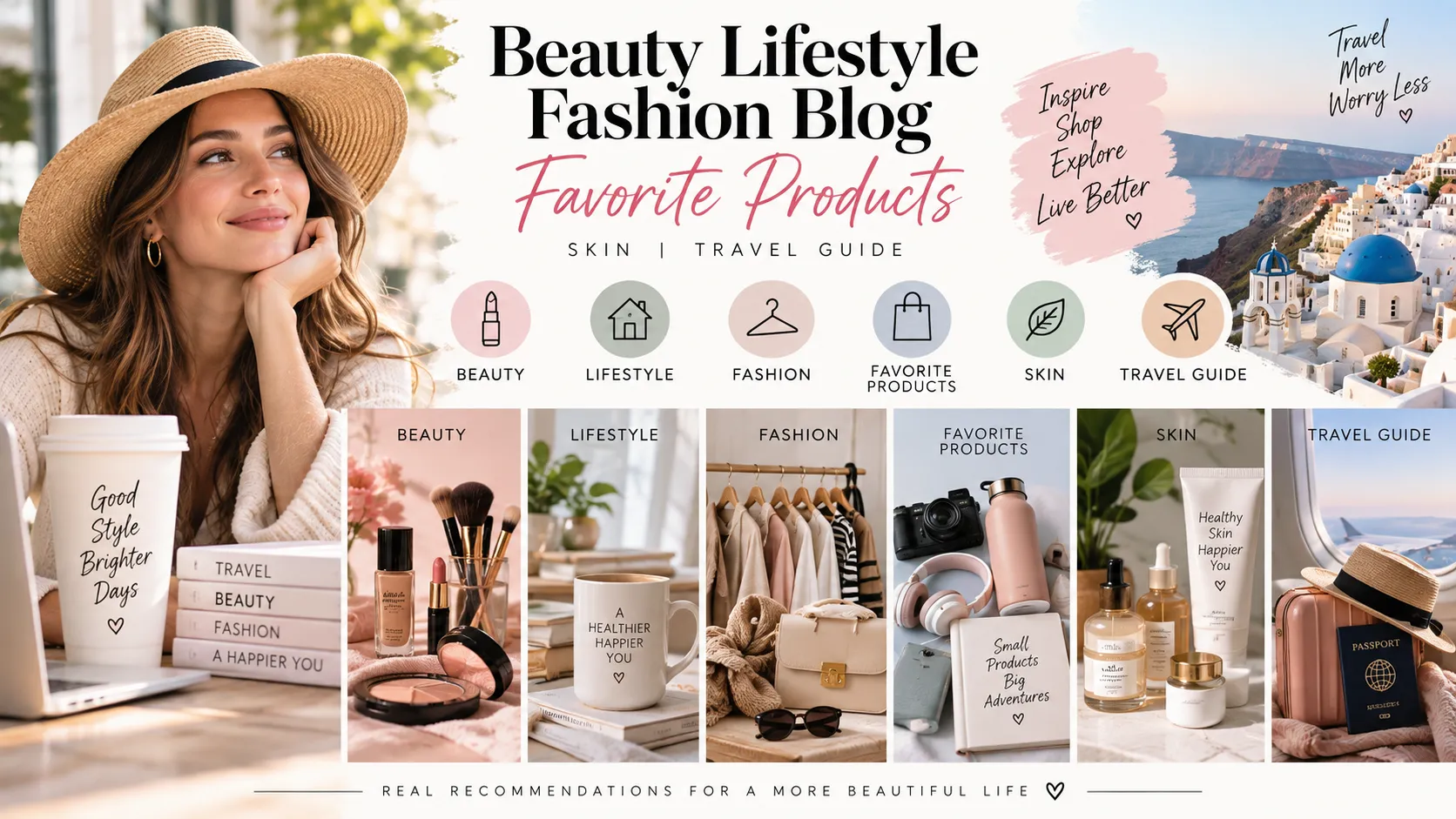
The phrase beauty lifestyle fashion blog favorite products skin travel is best understood as a broad lifestyle-content theme rather than the name of one clearly established product or service. It brings together beauty and skincare routines, wearable fashion, genuinely useful product recommendations, and practical travel advice in the style commonly seen on modern creator-led lifestyle blogs.
The most useful content in this space does more than publish shopping lists. It explains why a product is recommended, who it may suit, how it fits into everyday life, what changes when traveling, and whether a recommendation is based on genuine use, sponsorship, or an affiliate relationship.
What Does Beauty Lifestyle Fashion Blog Favorite Products Skin Travel Mean?
People searching this phrase are usually looking for a mixture of lifestyle inspiration and practical recommendations. The individual words point toward several closely connected content categories:
| Topic | What readers are usually looking for |
|---|---|
| Beauty | Makeup, haircare, everyday beauty routines and tools |
| Lifestyle | Useful everyday products, routines, organization and personal recommendations |
| Fashion | Clothing, shoes, accessories, seasonal outfits and wardrobe staples |
| Favorite products | Tried or frequently recommended items across multiple categories |
| Skin | Skincare routines, cleansers, moisturizers, sunscreen and ingredient guidance |
| Travel | Packing, travel beauty, comfortable fashion and portable essentials |
This combination is common among lifestyle creators. For example, blogs such as Travel Fashion Girl combine travel with beauty and toiletries, while other lifestyle bloggers publish collections spanning fashion, beauty and travel products.
The important point is that a useful lifestyle blog should connect these categories rather than treating them as unrelated shopping opportunities.
Why Beauty, Fashion, Skin and Travel Work Together
Beauty and fashion choices rarely exist in isolation. Climate, destination, activity level, available luggage space and personal routines can all affect what someone wears or packs.
A moisturizer that works comfortably at home may feel different after several hours on a dry aircraft. A fashionable shoe may look good but become impractical during a trip involving 20,000 steps a day. A ten-product skincare routine may also become unnecessarily complicated when traveling with only cabin baggage.
That is why the strongest lifestyle recommendations focus on real use cases.
Instead of simply saying a product is a “must-have,” useful content should answer questions such as:
- What problem does this product actually solve?
- Who is it suitable for?
- Has the recommendation been tested over time?
- Is there a cheaper or simpler alternative?
- Does it travel well?
- Are there important skin, safety or regulatory considerations?
That distinction separates useful editorial recommendations from a collection of affiliate links.
How to Evaluate Favorite Beauty Products
The term “favorite product” is subjective. What works beautifully for one person may be uncomfortable, irritating or unnecessary for another.
Readers should therefore look beyond rankings such as “best moisturizer” or “holy grail serum” and examine why something was recommended.
Look for Skin-Type Context
A recommendation becomes much more useful when the writer explains whether they have dry, oily, sensitive, acne-prone or combination skin.
A rich cream loved by someone with very dry skin may feel too heavy to another reader. Likewise, a strongly fragranced product may not be an ideal recommendation for someone prone to irritation.
The American Academy of Dermatology recommends keeping basic skincare relatively simple and notes that consistency can be more important than using a complicated routine. Its basic approach includes gentle cleansing, moisturizing and regular sun protection.
Do Not Introduce Too Many Products at Once
Buying several viral products together makes it difficult to identify what is helping or irritating the skin.
The AAD advises testing a new skincare product on a small area before adding it fully to a routine. Its dermatologists suggest applying the product to a test area twice daily for seven to ten days and watching for reactions such as redness, itching or swelling.
This is especially useful when trying products discovered through blogs, TikTok, Instagram or creator storefronts.
Read Labels Instead of Relying on Marketing Names
Words such as “clean,” “natural,” “clinical,” “detoxifying” or “miracle” do not automatically tell you whether something is appropriate for your skin.
FDA guidance encourages consumers to read cosmetic labels, follow directions and warnings, avoid sharing makeup and discard products that noticeably change in color or smell.
There is also an important distinction between ordinary cosmetics and products making drug-related claims. In the United States, products such as sunscreens and certain acne or dandruff treatments may be regulated differently from ordinary cosmetics.
A Practical Everyday Skin Routine
A beauty lifestyle blog does not need to recommend ten or fifteen products to provide useful skincare advice.
For many people, a basic routine can begin with three core categories.
Gentle Cleanser
Cleansing removes makeup, sunscreen, dirt and excess oil. Harsh scrubbing is usually unnecessary and may cause irritation.
The exact frequency depends on skin type, activity level and individual needs. Someone with particularly dry or sensitive skin may require a different routine from someone with oily skin.
Moisturizer
Moisturizer helps support the skin’s moisture balance and can be especially useful in dry climates, winter weather and air-conditioned environments.
Texture matters. Lightweight gels and lotions may appeal to some oily-skin users, while creams and ointment-style products may work better for significant dryness.
Broad-Spectrum Sunscreen
Sun protection is one area where evidence matters more than trends.
The American Academy of Dermatology recommends a broad-spectrum, water-resistant sunscreen with SPF 30 or higher for exposed skin. When outdoors, sunscreen generally needs to be reapplied about every two hours and after swimming or heavy sweating.
In September 2026, the FDA also finalized changes to the U.S. over-the-counter sunscreen framework, including removing PABA and trolamine salicylate from the monograph after reviewing their risk-benefit profiles. The agency stated that consumers did not need to take special action because it was not aware of currently marketed U.S. sunscreens containing those ingredients.
That recent example shows why skincare content should be periodically updated rather than leaving old product advice online indefinitely.
What Makes a Fashion Favorite Worth Buying?
Fashion recommendations can be just as subjective as beauty recommendations. A trending outfit may photograph beautifully but still be poor value if it is uncomfortable or difficult to wear repeatedly.
A better way to judge fashion favorites is to consider cost per wear and versatility.
A useful wardrobe item usually works with several pieces you already own. Neutral trousers, a comfortable everyday sneaker, a lightweight jacket, a dependable bag or a well-fitting shirt may provide more long-term value than something purchased purely because it is trending.
Consider the Real Occasion
Before purchasing a creator-recommended fashion item, ask where you would actually wear it.
A good lifestyle blog should distinguish between:
- Everyday clothing
- Workwear
- Occasion outfits
- Vacation clothing
- Activewear
- Seasonal pieces
- Comfortable travel outfits
These categories have different requirements.
A shoe recommended for dinner outfits does not necessarily need to perform like a walking shoe. A travel jacket, meanwhile, benefits from useful pockets, comfortable fabric and compatibility with changing temperatures.
Building a Small but Useful Travel Wardrobe
Travel makes fashion choices more practical.
The goal is usually not to bring the maximum number of outfits. It is to create enough combinations from fewer pieces.
A simple packing strategy might include three or four tops, two versatile bottoms, one extra layer, comfortable walking shoes and a more polished option when necessary.
Choosing pieces that work together can produce considerably more outfit combinations without filling an entire suitcase.
Climate should also guide decisions. A tropical beach trip has very different requirements from a rainy European city break or a winter destination.
Check actual conditions shortly before departure rather than packing based solely on what a destination normally looks like on social media.
Travel Beauty Should Usually Be Simpler
Travel is rarely the ideal time to experiment with an entirely new skincare routine.
The American Academy of Dermatology recommends bringing familiar skincare products, particularly for sensitive skin. It notes that hotel products often contain fragrance and that maintaining something close to the routine used at home can reduce the chance of an unexpected reaction.
Travel can also contribute to dryness because of changing climates and aircraft environments. Moisturizer, familiar cleansing products and sunscreen therefore tend to be more useful than packing numerous optional treatments.
A Sensible Travel Beauty Kit
A practical kit might contain:
| Product | Why it earns luggage space |
|---|---|
| Gentle cleanser | Keeps the normal cleansing routine consistent |
| Moisturizer | Helps with dryness caused by climate changes |
| SPF 30+ sunscreen | Essential for daytime UV protection |
| Lip balm | Useful in dry aircraft cabins and climates |
| Basic makeup | Avoids carrying an entire collection |
| Makeup remover | Useful when regular cleanser cannot remove everything |
| Hair essentials | Focus on products actually used at home |
| Small fragrance | Optional rather than essential |
The principle is simple: pack products you know you will use.
Travel Rules Matter When Packing Beauty Products
Travel-friendly packaging is not only about convenience. Airport security requirements can determine what can enter a cabin bag.
For travelers passing through U.S. airport security, the TSA’s 3-1-1 liquids rule generally limits liquids, gels, aerosols, creams and pastes in carry-on luggage to containers of 3.4 ounces or 100 milliliters or less, placed inside one quart-sized clear bag per passenger.
Rules can differ by country, airport and security technology, so international travelers should check the requirements that apply to their departure and connecting airports.
Decanting familiar products into compliant containers can sometimes be more practical than buying an entirely different travel-size skincare routine.
Sun Protection Becomes Even More Important While Traveling
Travel often means spending more time outdoors than normal.
Beach days are the obvious example, but walking tours, road trips, skiing, outdoor restaurants and even sitting next to certain windows can increase sun exposure.
AAD travel guidance recommends shade, protective clothing and broad-spectrum, water-resistant SPF 30 or higher sunscreen. It also recommends reapplication every two hours or after swimming or sweating.
Sunglasses, hats and clothing therefore belong in the same conversation as skincare.
Sun protection is not simply another beauty product recommendation. It is part of protecting skin from ultraviolet exposure.
Be Careful With Strong Actives During Sunny Trips
Products containing ingredients such as alpha hydroxy acids deserve extra attention when sun exposure increases.
The FDA states that topical cosmetics containing AHAs such as glycolic or lactic acid can increase sensitivity to sunlight and the possibility of sunburn. Its guidance recommends sunscreen, protective clothing and limiting sun exposure while using such products and for a period afterward.
This does not mean everyone needs to abandon their normal routine before vacation. It means readers should understand what their products contain and follow their instructions rather than copying someone else’s travel routine without context.
How to Judge Lifestyle Blog Product Recommendations
Product recommendations now sit at the intersection of editorial content, influencer marketing and online retail.
That creates an important transparency issue.
A blogger may genuinely love a product while also earning money if a reader purchases it. Those two facts can exist at the same time, but the commercial relationship should be disclosed.
The U.S. Federal Trade Commission states that influencers and publishers should clearly disclose material connections such as payment, free products or other relationships that could affect how readers evaluate an endorsement. Disclosures should be easy to notice rather than hidden on an About page or far away from the recommendation.
FTC guidance also states that affiliate relationships should be clearly and conspicuously disclosed near relevant recommendations or links.
Signs of a Strong Product Review
A trustworthy recommendation normally explains:
- How long the product was used
- What the reviewer expected from it
- Relevant skin type, hair type, body type or lifestyle context
- What worked well
- What did not work
- Who may not need the product
- Whether it was purchased, gifted or sponsored
- Whether links earn a commission
Reviews become less helpful when every product receives glowing praise.
Real products have trade-offs.
Favorite Products Versus Viral Products
A viral product and a genuinely useful favorite are not necessarily the same thing.
Virality can result from attractive packaging, a clever demonstration, celebrity exposure, limited availability or strong influencer campaigns. None of those factors proves that the product will suit a particular reader.
A more reliable approach is to wait for evidence of repeated use.
If someone calls a moisturizer a favorite but replaces it with another “favorite” every two weeks, the word loses much of its meaning.
Long-term favorite-product content is usually more useful when creators revisit earlier recommendations and explain whether they still use them.
Beauty and Fashion Shopping Without Overconsumption
Lifestyle content can unintentionally create the impression that routines and wardrobes constantly need upgrading.
They usually do not.
Before purchasing something recommended online, consider three simple questions:
- Do I already own something that performs the same function?
- Will I realistically use this regularly?
- Would I still want it if I had not just seen it promoted?
Waiting before buying can be surprisingly effective.
For skincare, constantly switching products may also complicate a routine and make it difficult to determine which ingredient is causing an improvement or reaction.
For fashion, choosing interchangeable items can create more outfits from fewer purchases.
What a High-Quality Beauty Lifestyle Fashion Blog Should Offer
The best version of a beauty lifestyle fashion blog favorite products skin travel resource should combine inspiration with accountability.
Readers should be able to distinguish facts from personal preferences.
Product claims should link to credible evidence when health or safety is involved. Sponsorships should be disclosed. Articles should have clear publication or update dates when recommendations can become outdated.
Strong lifestyle publishing should also acknowledge that different readers have different budgets, bodies, climates, skin types and priorities.
There is rarely one universally “best” moisturizer, dress, suitcase or travel routine.
The useful question is usually: best for whom, under what circumstances, and why?
Frequently Asked Questions
What is a beauty lifestyle fashion blog?
A beauty lifestyle fashion blog is a publication or creator platform that covers several related areas of everyday life, commonly including skincare, makeup, clothing, personal recommendations and travel. Many modern lifestyle blogs also include shopping links, product reviews and packing guides.
What beauty products are actually essential for travel?
Most travelers do not need a large routine. Familiar cleanser, moisturizer, sunscreen, basic makeup and any regularly used hair or personal-care products are usually a practical starting point. Dermatologists specifically recommend maintaining familiar skincare while traveling, especially for sensitive skin.
What SPF should I use while traveling?
The American Academy of Dermatology recommends broad-spectrum, water-resistant sunscreen with SPF 30 or higher. When outdoors, it should generally be reapplied about every two hours and after swimming or sweating.
Can skincare products go in carry-on luggage?
Yes, but liquid and cream products must comply with applicable airport-security requirements. Under current U.S. TSA rules, most liquids, creams, gels and aerosols in carry-on luggage must be in containers holding 3.4 ounces or 100 milliliters or less and fit within the permitted liquids bag.
Can you trust favorite-product recommendations from bloggers?
They can be useful, but readers should consider the reviewer’s testing method, personal needs and commercial relationships. Sponsored items, gifted products and commission-paying affiliate links should be clearly disclosed when required.
Should I try new skincare products while traveling?
Introducing several unfamiliar products during a trip is usually unnecessary, particularly for sensitive skin. Bringing products already tolerated at home makes it easier to keep the routine consistent, while new products can be tested separately before regular use.
Also Read: Lifestyle Wellness Health Beauty Skin Blog

1 Comment
Pingback: Best Products for Composite Veneer Care Contribute to Our Blog Guide